Electric Guitar Pickups Explained: Single-Coil vs Humbucker vs P-90
Pickups are the heart of an electric guitar's sound. Understanding the main types will help you choose a guitar, dial in better tones and decide whether an upgrade is worth it.
How a pickup works
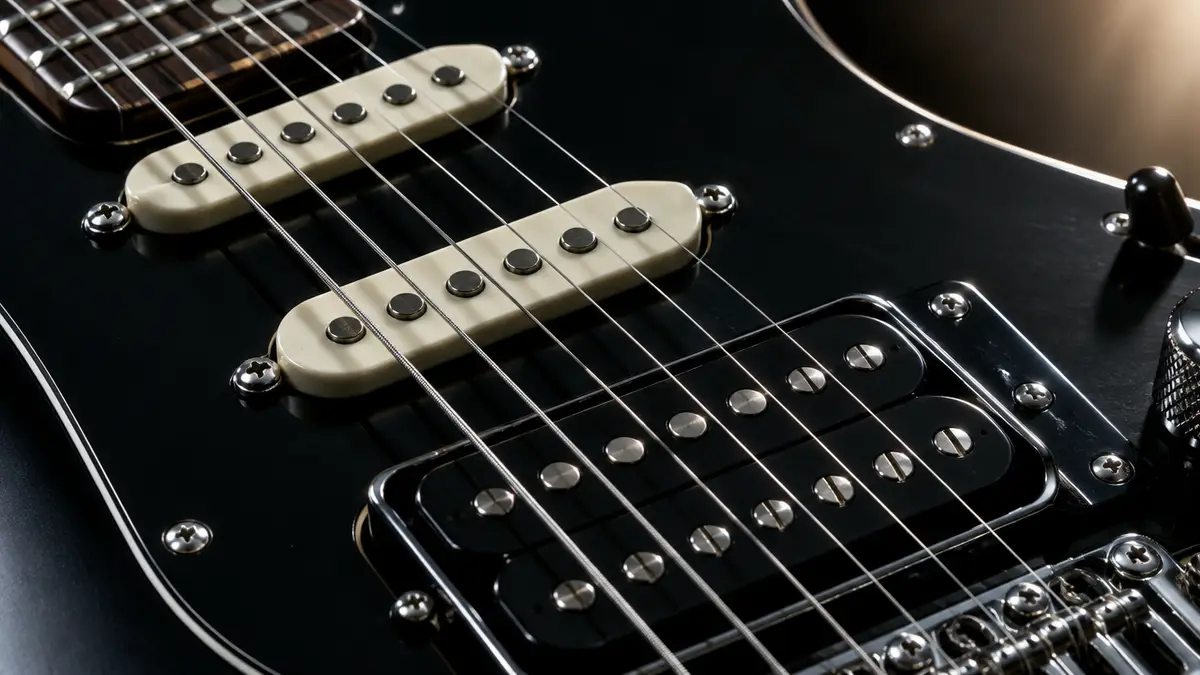
A pickup is a magnet wrapped in thousands of turns of very thin copper wire. When a steel string vibrates above it, it disturbs the magnetic field and creates a small electrical signal in the coil. That signal goes to the volume and tone controls, out of the jack and into your amp. This is why electric guitars need steel strings — nylon strings don't affect a magnetic field.
The three main types
| Single-coil | P-90 | Humbucker | |
|---|---|---|---|
| Coils | One narrow coil | One wide coil | Two coils side by side |
| Sound | Bright, clear, glassy, "quacky" | Gritty, punchy, between the two | Warm, thick, smooth, powerful |
| Output | Lower | Medium | Higher |
| Hum (60-cycle noise) | Yes | Yes | Cancelled |
| Classic guitars | Stratocaster, Telecaster | Les Paul Junior/Special, some SGs | Les Paul, SG, many rock and metal guitars |
| Classic styles | Blues, funk, country, indie, clean pop | Garage rock, punk, blues | Rock, hard rock, metal, jazz |
Single-coils
Bright and articulate, with lots of "sparkle" on clean sounds and a cutting edge when overdriven. Their downside is hum: a single coil also acts as an antenna for electrical noise from lights, screens and power supplies. Some hum is normal — see hum and noise for fixes.
Humbuckers
Two coils wired with opposite magnetic polarity and opposite winding. The noise picked up by each coil cancels out — it "bucks the hum" — while the string signal adds together. The result is a fuller, warmer, louder sound that drives an amp into distortion more easily.
P-90s
A single-coil design with a wider, flatter coil. They sound thicker and grittier than a typical single-coil but more open than a humbucker. Many players love them for raw rock and blues — but they do hum.
Pickup position matters as much as type
- Neck pickup: picks up more of the string's movement in the middle — warm, round and full. Great for clean chords and smooth solos.
- Bridge pickup: near the anchored end of the string — bright, tight and aggressive. The classic rock rhythm and lead position.
- Middle / in-between positions: on Strat-style guitars, positions 2 and 4 combine two pickups for the famous hollow, "quacky" funk and clean tones (and less hum).
- SSS — three single-coils (classic Strat)
- HH — two humbuckers (Les Paul style)
- HSS — humbucker at the bridge, two single-coils: very versatile for beginners
- SS — two single-coils (Telecaster style)
Active vs passive pickups
Passive pickups (the vast majority) need no power. Active pickups include a small preamp powered by a battery (usually 9V). They have high, consistent output, very low noise and a tight, compressed sound — popular in metal. Remember to unplug the cable when you are not playing, as the jack switches on the battery.
Coil splitting
Many humbucker guitars include a coil split (often a push-pull knob) that switches off one coil, giving a single-coil-like sound. It adds versatility — but split humbuckers usually don't sound exactly like true single-coils, and they hum when split.
Magnets: Alnico vs ceramic
- Alnico (aluminium-nickel-cobalt) magnets are associated with a warmer, more vintage, dynamic sound.
- Ceramic magnets tend to give a brighter, more aggressive, higher-output sound, often used in modern high-gain pickups.
Design and winding matter as much as magnet type, so treat these as tendencies, not rules.
Adjusting pickup height
Pickup height changes volume, balance and clarity — and it costs nothing to experiment:
- Hold down the strings at the last fret.
- Measure from the top of the pickup pole to the bottom of the string — roughly 2–3 mm on the bass side and a little less on the treble side is a common starting point.
- Raise a pickup that sounds weaker than the others; lower one that sounds harsh, muddy or "wobbly" (magnets too close can disturb string vibration).
- Balance volume between positions by ear.
More on this in our setup guide.
Should you upgrade your pickups?
Pickup swaps can transform a budget guitar — but try the free things first: new strings, a proper setup, pickup height adjustment and amp settings. If you still want a different character (for example, more output for metal or more vintage sparkle for blues), a pickup upgrade is one of the most effective changes you can make. See also amps and pedals.
Frequently asked questions
Which is better, single-coil or humbucker?
Neither is better — they sound different. Single-coils are brighter and clearer; humbuckers are warmer, louder and hum-free. An HSS guitar gives you both.
Why does my single-coil guitar hum?
Single-coil pickups pick up electromagnetic interference from lights, screens and power supplies. Turning away from the source or using the in-between positions on a Strat usually reduces it.
Are active pickups better for metal?
Many metal players prefer active pickups for their high output and low noise, but plenty use high-output passive humbuckers too.