Acoustic Guitar Tonewoods Explained: Spruce, Cedar, Mahogany, Rosewood and Maple
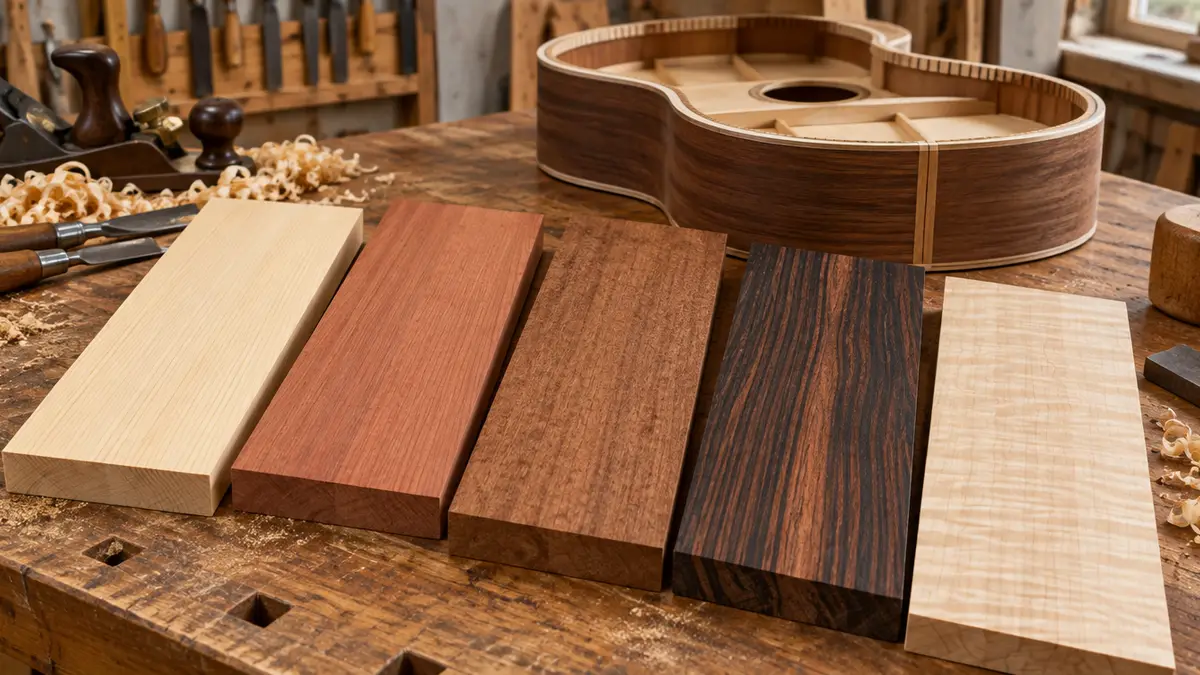
Spruce or cedar? Rosewood or mahogany? Tonewood is one of the most discussed — and most over-hyped — topics in guitar. Here is what the woods actually do, and when it matters for your next guitar.
First: what matters most
On an acoustic guitar, the sound comes mostly from the top (soundboard) vibrating. In rough order of impact on tone:
- Body size and shape — a dreadnought sounds bigger and bassier than a parlor, regardless of wood.
- Solid vs laminate top — a solid top vibrates more freely and sounds richer.
- Top wood and bracing — the type of wood and how the top is braced.
- Back and sides wood — shapes the overtones and "colour".
- Strings and setup — new strings change the sound more than many expect.
So wood matters — but it is one ingredient among several.
Top woods
| Wood | Sound | Best for |
|---|---|---|
| Sitka spruce | Clear, punchy, strong attack; handles hard strumming without "breaking up" | All-rounder; the most common top wood |
| Engelmann spruce | Lighter, a little warmer and more responsive than Sitka | Fingerstyle, lighter strumming |
| Adirondack (red) spruce | Very powerful, high headroom, rich | Hard-hitting bluegrass and strumming; usually premium guitars |
| Western red cedar | Warm, soft, responds quickly to a light touch; can get muddy if strummed very hard | Fingerstyle and classical guitars |
| Mahogany (top) | Dry, focused, mid-heavy, slightly compressed | Blues, folk, recording; "all-mahogany" guitars |
| Koa (top) | Bright, sweet, opens up over time | Premium guitars, fingerstyle |
Heavy strummer or play with a band: spruce. Mostly fingerpick or play softly at home: cedar is worth trying. Nylon-string classical guitars use both — cedar for a warmer, darker voice, spruce for clarity.
Back and sides woods
| Wood | Sound character |
|---|---|
| Rosewood (East Indian and others) | Deep bass, sparkling treble, rich overtones, slightly "scooped" mids — lush and big |
| Mahogany | Warm, woody, strong midrange, fewer overtones — focused and direct |
| Maple | Bright, clear and focused; cuts through a mix; less sustain |
| Sapele / ovangkol / walnut | Popular alternatives: sapele sounds close to mahogany; ovangkol close to rosewood; walnut sits in between |
| Laminates (various) | Less resonant, but tough and stable in changing humidity |
Solid wood vs laminate
Solid wood is one piece throughout (usually two book-matched halves). It vibrates more freely and tends to "open up" as it ages and is played. Laminate is layers of wood pressed together, like high-quality plywood.
| Solid | Laminate | |
|---|---|---|
| Tone | Richer, more complex | Simpler, less resonant |
| Humidity sensitivity | Higher — needs care | Low — great for travel |
| Price | Higher | Lower |
A great value combination for beginners is a solid top with laminate back and sides: most of the tonal benefit, with durability and lower cost. See best beginner guitars.
What about electric guitars?
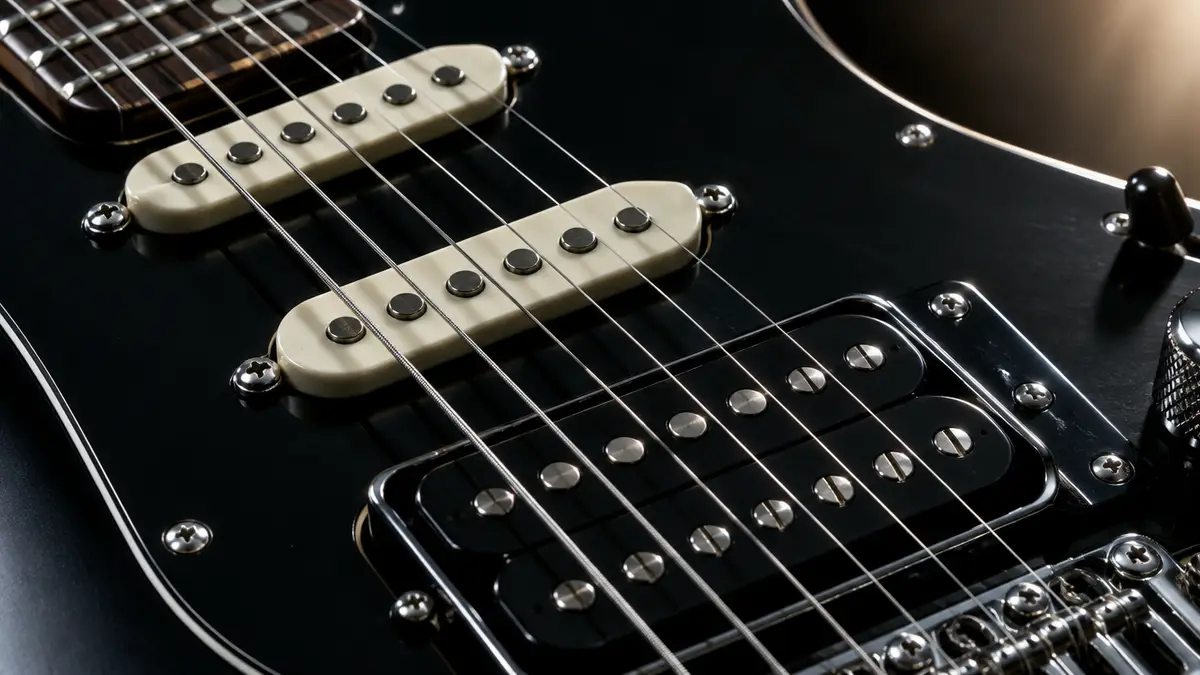
On electric guitars, the pickups, amp and effects shape the sound far more than the body wood. Body woods (alder, ash, mahogany, basswood) affect weight and feel, and can subtly influence sustain and character — but players and builders still debate how much. Choose an electric primarily on pickups, neck feel and weight. See our pickups guide.
Sustainability
Some traditional tonewoods are protected or under pressure, and many makers now use certified wood, alternative species and even composite materials that sound excellent. A good guitar does not need to be made from the rarest wood.
How to choose with your ears
- Play the same short piece on several guitars of the same size — strumming and picking.
- Close your eyes or ask someone else to play while you listen from a few metres away.
- Notice bass, clarity, sustain and how the guitar responds to soft vs hard playing.
- Choose the one that inspires you to keep playing — that matters more than the spec sheet.
Frequently asked questions
Which wood is best for an acoustic guitar?
There is no single best wood. Sitka spruce tops with rosewood or mahogany back and sides are classic, versatile combinations. Cedar suits fingerstyle; maple suits players who want a bright, focused sound.
Does a solid top really sound better?
Generally yes — solid tops vibrate more freely and sound richer than laminate tops, and they tend to improve with age and playing.
Do electric guitar body woods matter?
Much less than on acoustics. Pickups, amplifier, setup and strings have a bigger effect on an electric guitar's sound.