

Guitar Lessons by Level
Pick your level and keep climbing. Each lesson page tells you what to learn, in what order, and how to practise it so it actually sticks.
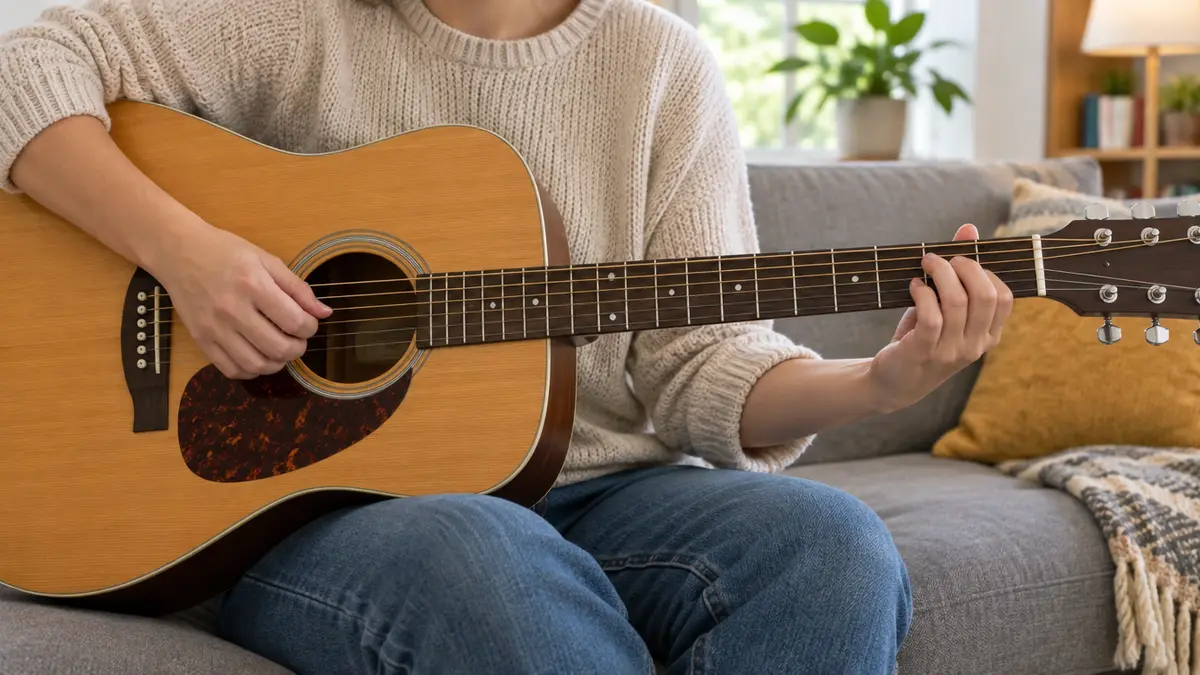
Beginner Guitar Lessons: Chords, Strumming, Picking and Rhythm
A structured beginner guitar course: open chords, simple strumming and fingerpicking patterns, keeping time, and your first riffs — with a clear practice order.
Read more →Intermediate Guitar Lessons: Barre Chords, Pentatonic Scale and First Solos
Take the next step: learn barre chords without pain, the minor pentatonic scale, faster chord changes, string bending, vibrato and how to build your first guitar solo.
Read more →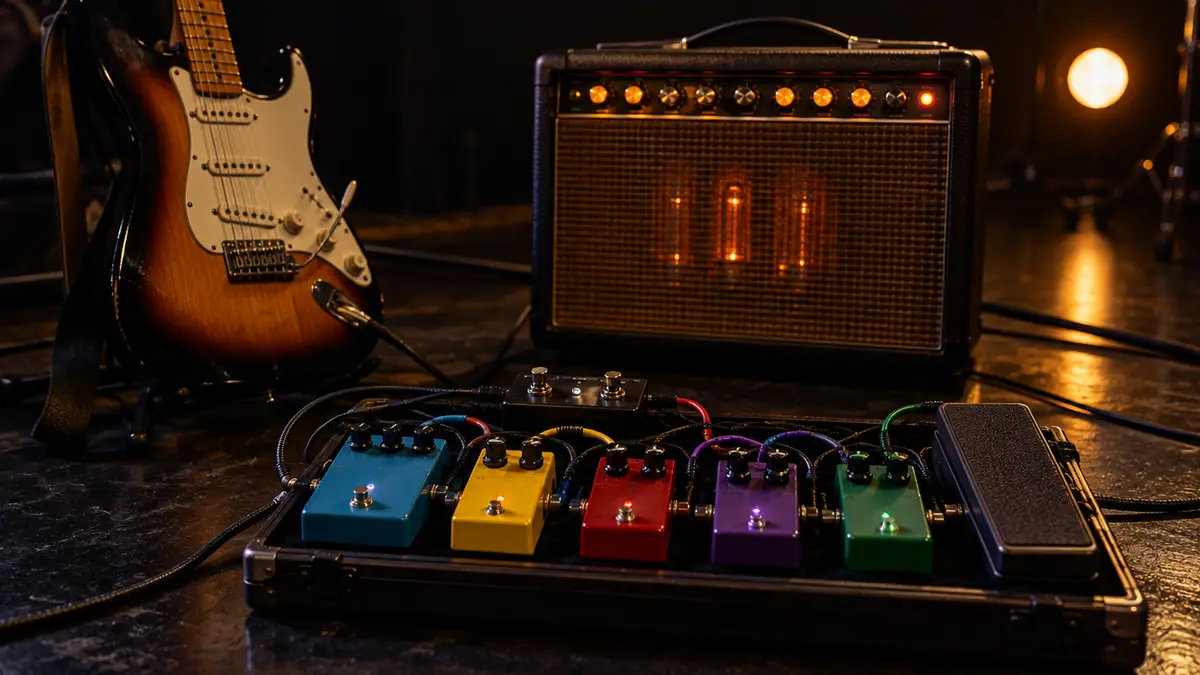
Advanced Guitar Lessons: Improvisation, Legato, Tapping, Sweep Picking and Arranging
Advanced guitar concepts explained: improvising over chord changes, modes, CAGED, legato, tapping, sweep picking, hybrid picking and arranging songs for solo guitar.
Read more →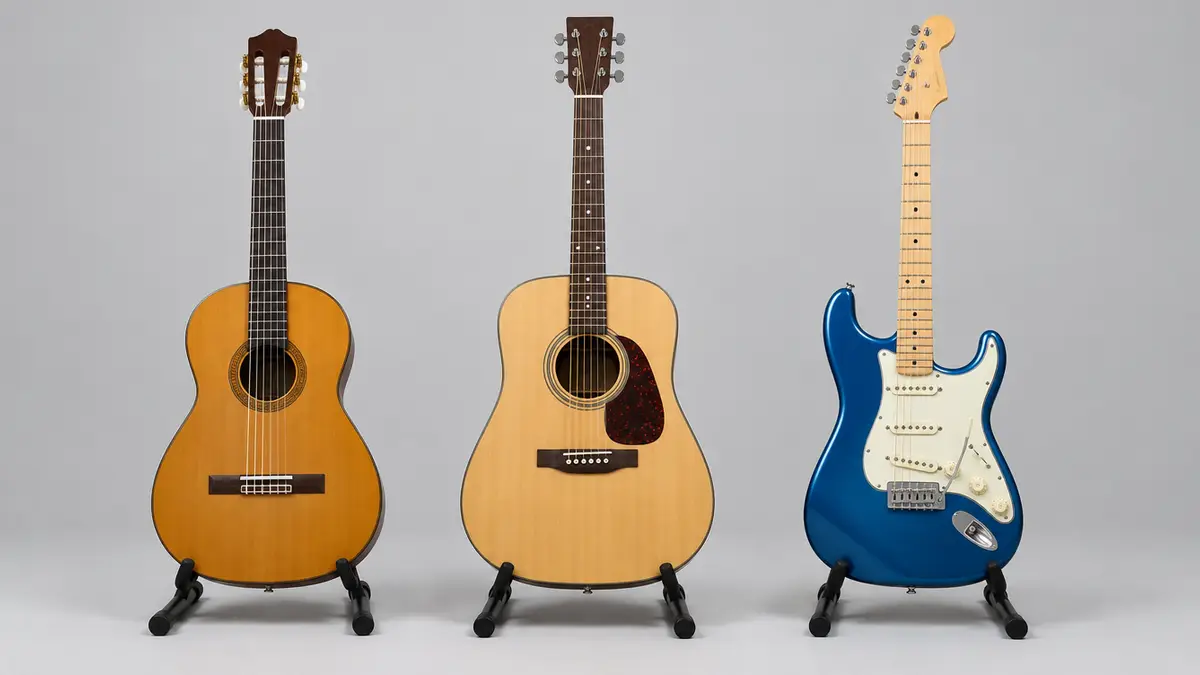
Guitar Music Theory Without the Pain: Notes, Scales, Chords and Keys
Practical music theory for guitarists: notes on the fretboard, frets and semitones, the major scale, how chords are built, keys and the numbers system — explained simply.
Read more →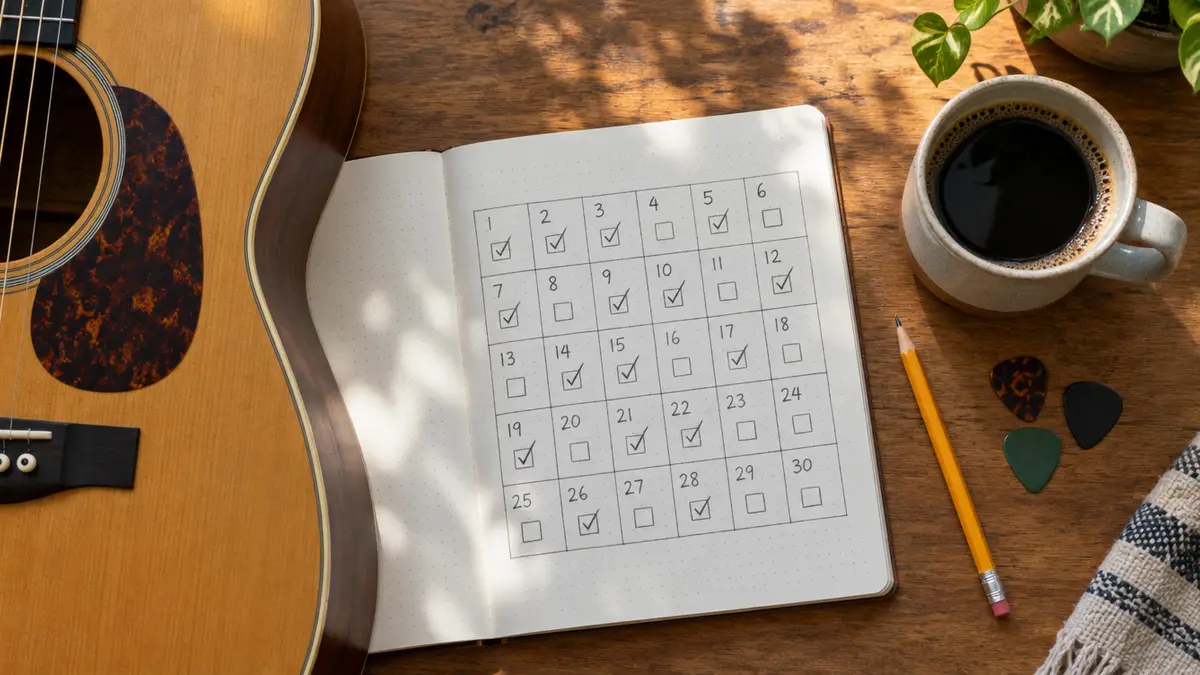
How to Read Guitar Tabs: Symbols, Techniques and Rhythm
Learn to read guitar tablature in 10 minutes: how tab lines and numbers work, every common symbol (h, p, b, /, ~, x, PM) and how to figure out the rhythm.
Read more →Which level am I?
Beginner: you are still learning open chords or can't yet change between them in time. Intermediate: open chords are comfortable and you are working on barre chords, scales and your first solos. Advanced: you can play most songs you like and want to improvise, expand your technique and arrange music yourself.
Wherever you are, the theory guide and tab reading lesson will speed up everything else.
Frequently asked questions
Do I need to read sheet music to play guitar?
No. Most guitarists learn from chord charts and tablature. Knowing the notes on the fretboard and basic theory is far more useful than reading standard notation.
When should I start learning scales?
Once you can change between a handful of open chords, start the minor pentatonic scale. It builds finger independence and is the foundation of rock, blues and pop soloing.