
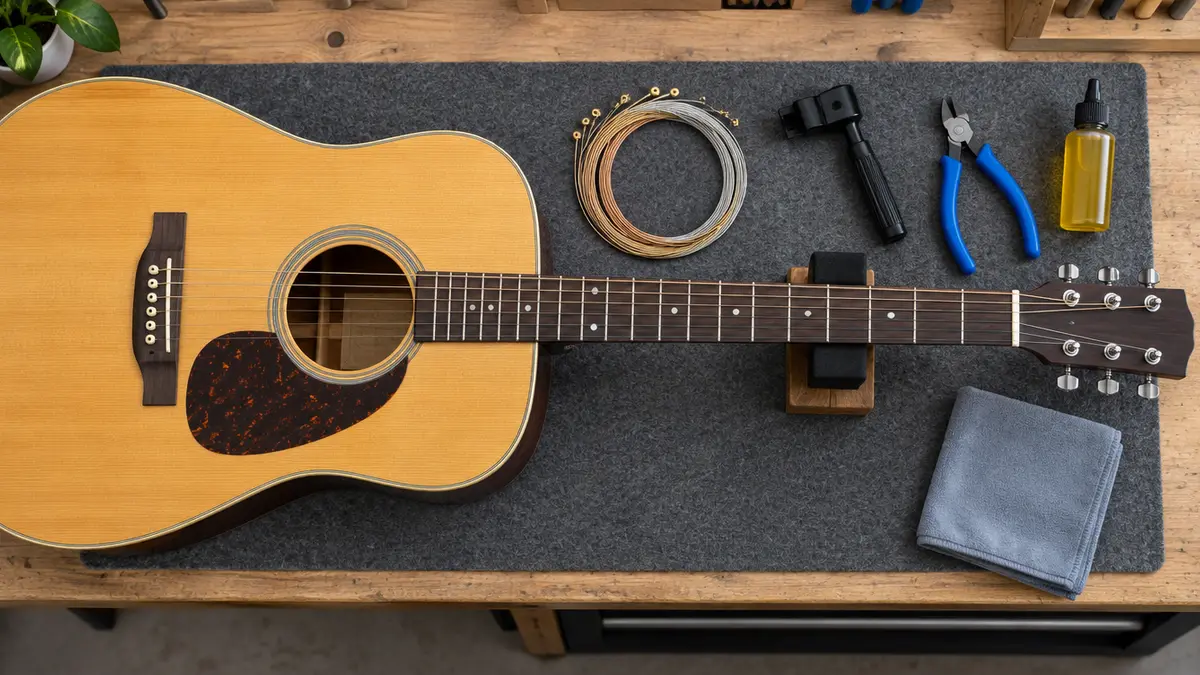
Guitar Care, Setup & Maintenance
A well-maintained guitar is easier to play and sounds better. Most basic care takes minutes and a few simple tools — here is how to do it safely.
How to Change Guitar Strings: Acoustic, Electric and Classical
Step-by-step guide to changing strings on acoustic, electric and classical guitars — removing old strings, winding correctly, stretching new strings and avoiding common mistakes.
Read more →How to Choose Guitar Strings: Gauges, Materials and Coatings
Guitar string guide: what string gauge means, light vs medium strings, phosphor bronze vs 80/20, nickel vs stainless steel, coated strings and nylon tension — with recommendations for beginners.
Read more →
Guitar Setup Explained: Action, Truss Rod, Intonation and Scale Length
Understand and adjust your guitar setup: string action height, neck relief and truss rod adjustment, intonation and scale length — with safe step-by-step instructions and when to see a tech.
Read more →Guitar Cleaning, Humidity and Storage: Keep Your Guitar Healthy
How to clean your guitar body, fretboard and strings, the ideal humidity for guitars, signs of a dry or wet guitar, and how to store and travel with a guitar safely.
Read more →
Small Guitar Repairs: Tuners, Nut, Crackling Pots, Hum and Buzz
Fix common small guitar problems yourself: loose or slipping tuners, a sticking nut, crackling volume knobs, loose output jacks, hum and noise in electric guitars, and fret buzz.
Read more →When to see a technician
Changing strings, cleaning and small adjustments are safe for anyone to learn. Fret levelling, nut cutting, crack repairs and major truss rod problems are best left to a professional guitar technician — a good setup typically costs about as much as two or three sets of strings and can transform a cheap guitar.
Frequently asked questions
How often should I change guitar strings?
Every 1–3 months for regular players, or sooner if strings look dull, feel gritty, won't stay in tune or sound flat and lifeless.
What humidity is best for an acoustic guitar?
Around 45–55% relative humidity. Solid-wood acoustics are especially sensitive to very dry air, which can cause cracks and sharp fret ends.