The 50 Greatest Guitarists of All Time — and the Guitars They Played
What did Hendrix, Clapton, Page and Van Halen actually play? Here are 50 of the most influential guitarists in history, the guitars behind their sound, and where to start listening. Part 1 of our series — #51–100 is coming next.
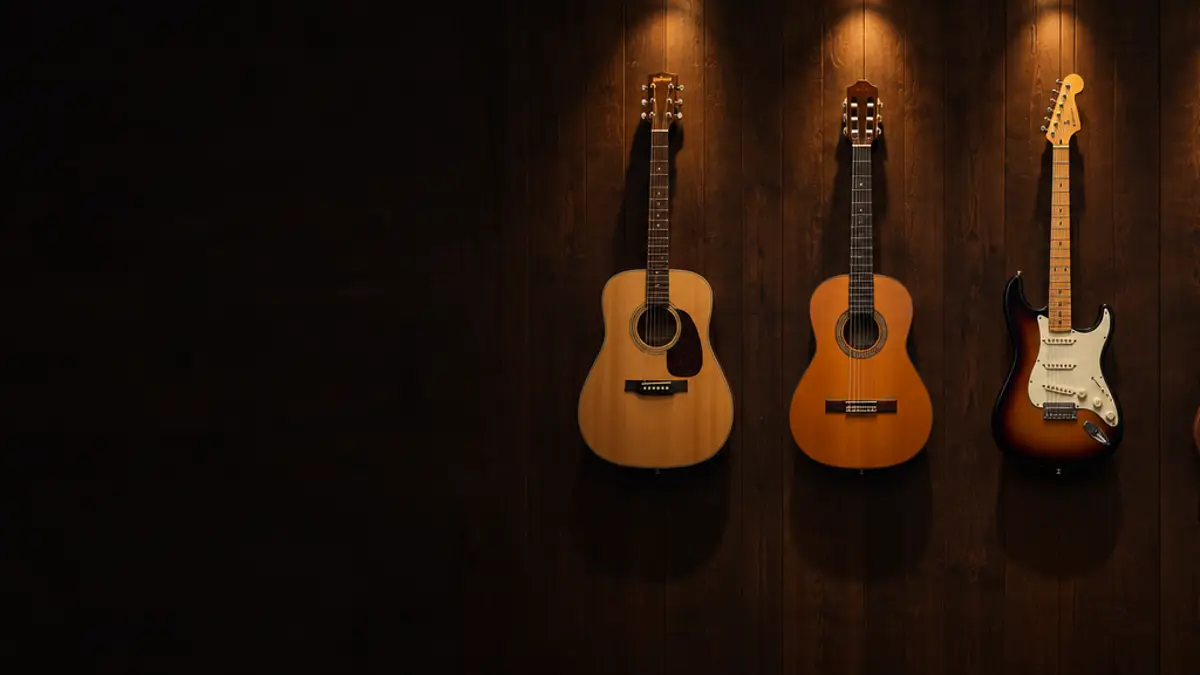
Any "greatest guitarists" list is subjective. Ours is an editorial ranking based on four things: influence on other players, innovation, technique and lasting legacy — across rock, blues, jazz, country, classical and more. Gear details reflect each player's best-known instruments; most legends played many guitars over their careers.
The list at a glance
| # | Guitarist | Main guitar type | Style |
|---|---|---|---|
| 1 | Jimi Hendrix | Stratocaster | rock, blues |
| 2 | Eric Clapton | Stratocaster | blues, rock |
| 3 | Jimmy Page | Les Paul | hard rock |
| 4 | Chuck Berry | Semi-hollow | rock and roll |
| 5 | Eddie Van Halen | Superstrat | hard rock |
| 6 | B.B. King | Semi-hollow | blues |
| 7 | Jeff Beck | Stratocaster | rock, fusion |
| 8 | Stevie Ray Vaughan | Stratocaster | Texas blues |
| 9 | Keith Richards | Telecaster | rock |
| 10 | David Gilmour | Stratocaster | progressive rock |
| 11 | Django Reinhardt | Acoustic | gypsy jazz |
| 12 | Brian May | Custom-built | rock |
| 13 | Duane Allman | Les Paul | Southern rock |
| 14 | Les Paul | Les Paul | jazz, pop |
| 15 | Tony Iommi | SG | heavy metal |
| 16 | Carlos Santana | PRS | Latin rock |
| 17 | Sister Rosetta Tharpe | SG | gospel, early rock and roll |
| 18 | Prince | Telecaster | funk, pop, rock |
| 19 | Pete Townshend | SG | rock |
| 20 | Chet Atkins | Gretsch / hollow body | country |
| 21 | Wes Montgomery | Archtop | jazz |
| 22 | Mark Knopfler | Stratocaster | rock |
| 23 | Slash | Les Paul | hard rock |
| 24 | George Harrison | Gretsch / hollow body | rock, pop |
| 25 | Robert Johnson | Acoustic | Delta blues |
| 26 | Angus Young | SG | hard rock |
| 27 | Randy Rhoads | Les Paul | heavy metal |
| 28 | Albert King | Flying V / Explorer | blues |
| 29 | Freddie King | Semi-hollow | blues |
| 30 | Muddy Waters | Telecaster | Chicago blues |
| 31 | Andrés Segovia | Classical / flamenco | classical |
| 32 | Paco de Lucía | Classical / flamenco | flamenco |
| 33 | John McLaughlin | Double-neck / other | jazz fusion |
| 34 | Peter Green | Les Paul | blues |
| 35 | The Edge | Flying V / Explorer | rock |
| 36 | Kurt Cobain | Offset (Jaguar / Mustang) | grunge |
| 37 | Joni Mitchell | Acoustic | folk, jazz |
| 38 | Johnny Marr | Rickenbacker | indie |
| 39 | Neil Young | Les Paul | rock, folk |
| 40 | Buddy Guy | Stratocaster | blues |
| 41 | Ritchie Blackmore | Stratocaster | hard rock |
| 42 | Steve Vai | Superstrat | instrumental rock |
| 43 | Joe Satriani | Superstrat | instrumental rock |
| 44 | Yngwie Malmsteen | Stratocaster | neo-classical metal |
| 45 | Tom Morello | Custom-built | rap metal |
| 46 | John Frusciante | Stratocaster | alternative rock |
| 47 | Dimebag Darrell | Other shapes | groove metal |
| 48 | Nile Rodgers | Stratocaster | funk, disco, pop |
| 49 | Bonnie Raitt | Stratocaster | blues, rock |
| 50 | John Mayer | Stratocaster | blues, pop |
Which guitars did the legends play most?
Counting each player's main, best-known guitar:
| Guitar type | Players | |
|---|---|---|
| Stratocaster | 13 | █████████████ |
| Les Paul | 7 | ███████ |
| SG | 4 | ████ |
| Semi-hollow | 3 | ███ |
| Superstrat | 3 | ███ |
| Telecaster | 3 | ███ |
| Acoustic | 3 | ███ |
| Custom-built | 2 | ██ |
| Gretsch / hollow body | 2 | ██ |
| Flying V / Explorer | 2 | ██ |
| Classical / flamenco | 2 | ██ |
| PRS | 1 | █ |
| Archtop | 1 | █ |
| Double-neck / other | 1 | █ |
| Offset (Jaguar / Mustang) | 1 | █ |
| Rickenbacker | 1 | █ |
| Other shapes | 1 | █ |
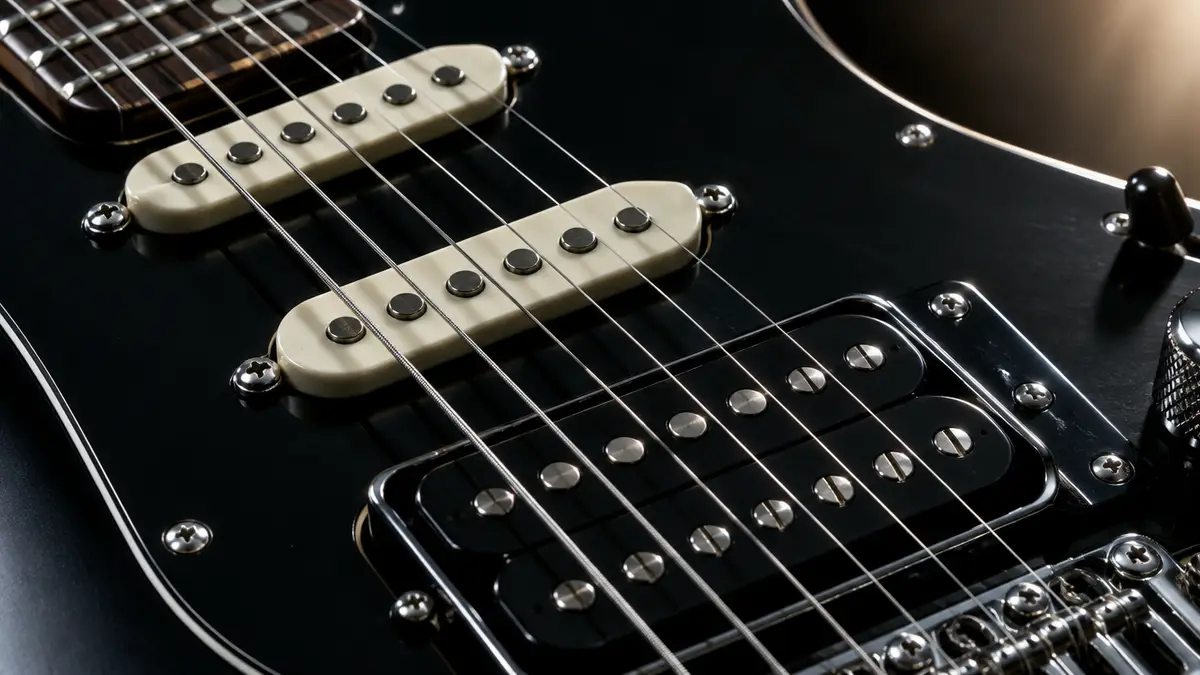
The Stratocaster dominates — its versatility suits blues, rock, funk and pop alike — followed by the Les Paul, the go-to for thick, sustaining rock tone. Want to know why? See single-coils vs humbuckers.
The 50 greatest guitarists
1. Jimi Hendrix
1960s · rock, blues
- Main guitar: Fender Stratocaster — right-handed models flipped over and restrung for his left hand
- Also known for: Gibson Flying V; Marshall stacks, Fuzz Face, wah-wah and Uni-Vibe
- Why they matter: Turned feedback, fuzz, the whammy bar and the studio itself into instruments. Almost every rock guitarist since owes him something.
- Start listening with: "Little Wing", "Voodoo Child (Slight Return)"
2. Eric Clapton
1960s– · blues, rock
- Main guitar: "Blackie", a Fender Stratocaster assembled from three 1950s Strats
- Also known for: "Beano" Gibson Les Paul (Bluesbreakers era), the psychedelic-painted "Fool" Gibson SG (Cream), Martin 000-42 (Unplugged)
- Why they matter: Brought electric blues to a mass rock audience; famous for the thick "woman tone" with Cream and his later sweet Strat sound.
- Start listening with: "Crossroads" (Cream), "Layla"
3. Jimmy Page
1960s– · hard rock
- Main guitar: 1959 Gibson Les Paul Standard, known as "Number One"
- Also known for: Fender Telecaster (the "Dragon" Tele), Gibson EDS-1275 double-neck, Danelectro in DADGAD tuning
- Why they matter: Riff architect and studio producer; mixed blues, folk and alternate tunings into Led Zeppelin's huge sound.
- Start listening with: "Whole Lotta Love", "Stairway to Heaven"
4. Chuck Berry
1950s– · rock and roll
- Main guitar: Gibson ES-350T, later ES-355 semi-hollows
- Also known for: Double-stop licks through small amps
- Why they matter: Wrote the vocabulary of rock-and-roll guitar — that double-stop intro is still everywhere.
- Start listening with: "Johnny B. Goode"
5. Eddie Van Halen
1970s– · hard rock
- Main guitar: "Frankenstrat", a home-built Strat-style guitar with a humbucker in the bridge
- Also known for: Later Music Man, Peavey Wolfgang and EVH Wolfgang signature models
- Why they matter: Popularised two-hand tapping and dive bombs, and effectively invented the "superstrat".
- Start listening with: "Eruption", "Ain't Talkin' 'bout Love"
6. B.B. King
1950s– · blues
- Main guitar: "Lucille", Gibson ES-355-style semi-hollow guitars (later his own Lucille model)
- Also known for: Small combo amps, light touch
- Why they matter: Proved one perfectly bent note with that butterfly vibrato could say more than a hundred fast ones.
- Start listening with: "The Thrill Is Gone"
7. Jeff Beck
1960s– · rock, fusion
- Main guitar: Fender Stratocaster
- Also known for: Fender Esquire (Yardbirds), "Oxblood" Gibson Les Paul (Blow by Blow era)
- Why they matter: Played with his fingers, sculpting melodies with the whammy bar and volume knob like a singer.
- Start listening with: "'Cause We've Ended as Lovers"
8. Stevie Ray Vaughan
1980s · Texas blues
- Main guitar: A battered early-1960s Fender Stratocaster he called "Number One"
- Also known for: Very heavy strings, Ibanez Tube Screamer, Fender and Dumble amps
- Why they matter: Revived blues guitar in the 1980s with ferocious attack and huge tone.
- Start listening with: "Pride and Joy", "Texas Flood"
9. Keith Richards
1960s– · rock
- Main guitar: Fender Telecaster "Micawber", strung with five strings in open G
- Also known for: Gibson Les Paul and ES-355 in the 1960s
- Why they matter: The riff king of open-G tuning — rhythm guitar as the engine of the band.
- Start listening with: "Start Me Up", "Honky Tonk Women"
10. David Gilmour
1960s– · progressive rock
- Main guitar: "The Black Strat", a heavily modified Fender Stratocaster
- Also known for: Gibson Les Paul goldtop (the "Another Brick in the Wall, Part 2" solo), Telecasters, lap steels
- Why they matter: Every note placed with care: slow bends, space and delay that soar.
- Start listening with: "Comfortably Numb", "Shine On You Crazy Diamond"
11. Django Reinhardt
1930s–50s · gypsy jazz
- Main guitar: Selmer-Maccaferri acoustic guitar
- Also known for: Played mainly with two fretting fingers after a fire injured his hand
- Why they matter: Founded gypsy jazz; breathtaking speed and invention with a damaged hand.
- Start listening with: "Minor Swing"
12. Brian May
1970s– · rock
- Main guitar: "Red Special", built with his father from wood including an old fireplace mantel
- Also known for: Vox AC30 amps, a treble booster and a sixpence coin as a pick
- Why they matter: Layered guitar "orchestras" and melodic solos that sing like a voice.
- Start listening with: "Bohemian Rhapsody" (solo), "Brighton Rock"
13. Duane Allman
1960s–71 · Southern rock
- Main guitar: Gibson Les Paul (goldtop, later sunburst)
- Also known for: Gibson SG for slide, a glass medicine bottle as a slide
- Why they matter: Raised slide guitar to an art form in a tragically short career.
- Start listening with: "Statesboro Blues" (live), the slide on "Layla"
14. Les Paul
1940s– · jazz, pop
- Main guitar: His home-made "Log" prototype, then the Gibson Les Paul that carries his name
- Also known for: Pioneer of multitrack recording and tape effects
- Why they matter: Inventor, studio pioneer and dazzling player — helped create the solid-body electric guitar.
- Start listening with: "How High the Moon" (with Mary Ford)
15. Tony Iommi
1960s– · heavy metal
- Main guitar: Gibson SG (left-handed)
- Also known for: Signature SG models; light strings and down-tuning after losing two fingertips in an accident
- Why they matter: Invented the heavy metal riff.
- Start listening with: "Paranoid", "Iron Man"
16. Carlos Santana
1960s– · Latin rock
- Main guitar: PRS Santana models
- Also known for: Gibson SG Special at Woodstock, Yamaha SG in the 1970s
- Why they matter: Singing sustain and Latin rhythms — instantly recognisable from one note.
- Start listening with: "Samba Pa Ti", "Oye Como Va"
17. Sister Rosetta Tharpe
1930s–60s · gospel, early rock and roll
- Main guitar: A white Gibson Les Paul Custom with the SG-style body (famous 1964 footage)
- Also known for: Earlier archtop electrics
- Why they matter: The "godmother of rock and roll" — distorted electric gospel decades ahead of its time.
- Start listening with: "Strange Things Happening Every Day", "Didn't It Rain"
18. Prince
1970s–2016 · funk, pop, rock
- Main guitar: An H.S. Anderson "Mad Cat" Telecaster-style guitar (sold under the Hohner name)
- Also known for: Custom "Cloud" guitars and the Love Symbol guitar
- Why they matter: Tight funk rhythm and blistering, emotional solos — a virtuoso often underrated as a guitarist.
- Start listening with: "Purple Rain"
19. Pete Townshend
1960s– · rock
- Main guitar: Gibson SG Special (late-1960s The Who)
- Also known for: Rickenbacker in the early years, Les Paul Deluxe in the 1970s, later Fender Strats
- Why they matter: Power chords, windmills and guitar smashing; rhythm guitar as pure energy.
- Start listening with: "My Generation", "Won't Get Fooled Again"
20. Chet Atkins
1950s– · country
- Main guitar: Gretsch 6120 and Country Gentleman hollow bodies
- Also known for: Later Gibson nylon-string electric models
- Why they matter: "Mister Guitar": thumb-and-fingers picking that shaped country and fingerstyle playing.
- Start listening with: "Mister Sandman"
21. Wes Montgomery
1950s–60s · jazz
- Main guitar: Gibson L-5CES archtop
- Also known for: Played with his thumb instead of a pick
- Why they matter: Warm thumb tone and blazing octave melodies; one of jazz guitar's greatest voices.
- Start listening with: "Four on Six"
22. Mark Knopfler
1970s– · rock
- Main guitar: Fender Stratocaster (the red Strat of early Dire Straits)
- Also known for: National Style O resonator (the Brothers in Arms cover), Gibson Les Paul ("Money for Nothing")
- Why they matter: Fingerpicked lead lines with a clean, articulate tone.
- Start listening with: "Sultans of Swing"
23. Slash
1980s– · hard rock
- Main guitar: Gibson Les Paul — including the replica built by luthier Kris Derrig used on Appetite for Destruction
- Also known for: Marshall amps, many signature Les Pauls
- Why they matter: Brought melodic, bluesy Les Paul soloing back to the mainstream.
- Start listening with: "Sweet Child O' Mine"
24. George Harrison
1960s–2001 · rock, pop
- Main guitar: Gretsch Country Gentleman and Duo Jet
- Also known for: Rickenbacker 360/12, the "Rocky" Stratocaster, a Les Paul named "Lucy", Epiphone Casino
- Why they matter: Concise, melodic Beatles parts, 12-string jangle and an expressive slide style.
- Start listening with: "Something", "Here Comes the Sun"
25. Robert Johnson
1930s · Delta blues
- Main guitar: Gibson L-1 flat-top acoustic (seen in one of his few known photos)
- Also known for: Bottleneck slide
- Why they matter: Bass, rhythm and melody at once — his recordings shaped generations of blues and rock players.
- Start listening with: "Cross Road Blues"
26. Angus Young
1970s– · hard rock
- Main guitar: Gibson SG
- Also known for: Marshall amps, minimal effects
- Why they matter: High-energy blues-rock lead playing with pure, loud tone.
- Start listening with: "Back in Black", "Highway to Hell"
27. Randy Rhoads
1970s–82 · heavy metal
- Main guitar: Gibson Les Paul Custom (white)
- Also known for: Karl Sandoval polka-dot Flying V; the Jackson "Rhoads" model
- Why they matter: Fused classical theory with metal; massively influential despite a very short career.
- Start listening with: "Crazy Train"
28. Albert King
1950s– · blues
- Main guitar: Gibson Flying V, which he called "Lucy"
- Also known for: Left-handed, playing a right-handed guitar flipped over without restringing
- Why they matter: Enormous string bends that influenced Hendrix, Clapton and SRV.
- Start listening with: "Born Under a Bad Sign"
29. Freddie King
1950s–76 · blues
- Main guitar: Gibson ES-345 / ES-355 semi-hollows
- Also known for: Earlier a Gibson Les Paul goldtop; plastic thumb pick plus a metal finger pick
- Why they matter: Stinging, powerful blues instrumentals that became rock standards.
- Start listening with: "Hide Away"
30. Muddy Waters
1940s– · Chicago blues
- Main guitar: Fender Telecaster
- Also known for: Slide guitar
- Why they matter: Electrified Delta blues and created the Chicago blues sound that inspired the Rolling Stones.
- Start listening with: "Hoochie Coochie Man", "Mannish Boy"
31. Andrés Segovia
1910s–80s · classical
- Main guitar: Hermann Hauser classical guitar (1937)
- Also known for: Ramírez guitars
- Why they matter: Made the guitar a respected concert instrument and inspired a new repertoire.
- Start listening with: His Bach transcriptions
32. Paco de Lucía
1960s–2014 · flamenco
- Main guitar: Conde Hermanos flamenco guitars
- Also known for: Brought the cajón into flamenco
- Why they matter: Revolutionised flamenco with jazz harmony and staggering technique.
- Start listening with: "Entre dos aguas"
33. John McLaughlin
1960s– · jazz fusion
- Main guitar: Gibson EDS-1275 double-neck (Mahavishnu Orchestra)
- Also known for: A custom scalloped acoustic with the band Shakti
- Why they matter: Fused jazz, rock and Indian music with blinding speed.
- Start listening with: "Meeting of the Spirits"
34. Peter Green
1960s · blues
- Main guitar: 1959 Gibson Les Paul "Greeny", later owned by Gary Moore and Kirk Hammett
- Also known for: Known for an out-of-phase middle-position tone
- Why they matter: Restraint and feel; B.B. King said he had "the sweetest tone".
- Start listening with: "Albatross", "Black Magic Woman" (which he wrote)
35. The Edge
1980s– · rock
- Main guitar: Gibson Explorer (1976)
- Also known for: Fender Stratocaster, rhythmic delay effects
- Why they matter: Built U2's sound from rhythmic delays and chiming textures instead of solos.
- Start listening with: "Where the Streets Have No Name"
36. Kurt Cobain
1980s–94 · grunge
- Main guitar: Fender Mustang and Jaguar (modified)
- Also known for: Univox Hi-Flier; Martin D-18E on MTV Unplugged
- Why they matter: Raw quiet-loud dynamics that changed rock in the 1990s.
- Start listening with: "Smells Like Teen Spirit"
37. Joni Mitchell
1960s– · folk, jazz
- Main guitar: Martin acoustics (including a D-28) in dozens of open tunings
- Also known for: Later electric and modelling guitars
- Why they matter: Invented her own harmonic world through open tunings.
- Start listening with: "Big Yellow Taxi", the album Blue
38. Johnny Marr
1980s– · indie
- Main guitar: Rickenbacker 330
- Also known for: Gibson ES-355, Fender Jaguar (signature model)
- Why they matter: Intricate, arpeggiated "jangle" that defined indie guitar.
- Start listening with: "This Charming Man"
39. Neil Young
1960s– · rock, folk
- Main guitar: "Old Black", a 1953 Gibson Les Paul goldtop painted black
- Also known for: Martin D-45 and D-28 acoustics
- Why they matter: Raw, feedback-drenched solos — and beautiful folk on acoustic.
- Start listening with: "Cortez the Killer", "Heart of Gold"
40. Buddy Guy
1950s– · blues
- Main guitar: Fender Stratocaster (his polka-dot signature model)
- Also known for: Loud Fender amps
- Why they matter: Wild showmanship and intensity that influenced Hendrix and Clapton.
- Start listening with: "Damn Right, I've Got the Blues"
41. Ritchie Blackmore
1960s– · hard rock
- Main guitar: Fender Stratocaster with a scalloped fretboard
- Also known for: Marshall amps
- Why they matter: Neo-classical riffs and solos; wrote one of the most famous riffs ever.
- Start listening with: "Smoke on the Water", "Highway Star"
42. Steve Vai
1980s– · instrumental rock
- Main guitar: Ibanez JEM
- Also known for: Ibanez Universe 7-string
- Why they matter: Virtuoso showman who pushed whammy and tonal expression to extremes.
- Start listening with: "For the Love of God"
43. Joe Satriani
1980s– · instrumental rock
- Main guitar: Ibanez JS series
- Also known for: Chrome and custom-finished JS models
- Why they matter: Made instrumental guitar rock a commercial success with melody first.
- Start listening with: "Surfing with the Alien", "Always with Me, Always with You"
44. Yngwie Malmsteen
1980s– · neo-classical metal
- Main guitar: Fender Stratocaster with a scalloped fretboard
- Also known for: Marshall amps
- Why they matter: Neo-classical sweep picking and speed that defined 1980s shred.
- Start listening with: "Black Star"
45. Tom Morello
1990s– · rap metal
- Main guitar: A custom guitar he named "Arm the Homeless"
- Also known for: Fender Telecaster "Sendero" for drop D, DigiTech Whammy pedal
- Why they matter: Turned the guitar into a DJ turntable with killswitch and whammy tricks.
- Start listening with: "Killing in the Name"
46. John Frusciante
1980s– · alternative rock
- Main guitar: 1962 Fender Stratocaster
- Also known for: Telecaster, Jaguar, Gretsch White Falcon
- Why they matter: Minimal, emotional parts that serve the song.
- Start listening with: "Under the Bridge", "Californication"
47. Dimebag Darrell
1980s–2004 · groove metal
- Main guitar: Dean ML
- Also known for: Washburn models, Randall amps
- Why they matter: Defined groove metal riffing with pinch harmonics and squeals.
- Start listening with: "Walk", "Cowboys from Hell"
48. Nile Rodgers
1970s– · funk, disco, pop
- Main guitar: A white 1959/60 Fender Stratocaster nicknamed "The Hitmaker"
- Also known for: Clean, compressed tone
- Why they matter: The king of funk "chicken-scratch" rhythm — heard on hits for five decades.
- Start listening with: "Le Freak", "Get Lucky"
49. Bonnie Raitt
1970s– · blues, rock
- Main guitar: Fender Stratocaster — her 1965 Strat nicknamed "Brownie"
- Also known for: Plays slide on her middle finger
- Why they matter: One of the finest slide guitarists of all time.
- Start listening with: "Love Me Like a Man", "Something to Talk About"
50. John Mayer
2000s– · blues, pop
- Main guitar: Fender Stratocaster
- Also known for: PRS Silver Sky (his Strat-inspired signature), Martin signature acoustics
- Why they matter: Brought Hendrix- and SRV-style blues to a new generation of pop listeners.
- Start listening with: "Gravity", "Slow Dancing in a Burning Room"
Get the look (and sound) on a budget
You don't need a vintage instrument to explore these sounds. Affordable versions of every classic design exist:
| Classic design | Played by | Affordable way in |
|---|---|---|
| Stratocaster | Hendrix, Clapton, Gilmour, SRV, Mayer | Squier Classic Vibe or Sonic Stratocaster, Yamaha Pacifica |
| Les Paul | Page, Slash, Peter Green, Neil Young | Epiphone Les Paul models |
| SG | Iommi, Angus Young, Townshend | Epiphone SG models |
| Telecaster | Keith Richards, Muddy Waters, Prince | Squier Telecaster models |
| Semi-hollow (ES-335 style) | B.B. King, Chuck Berry, Freddie King | Epiphone ES-335 / Dot, Gretsch Streamliner |
| Flying V / Explorer | Albert King, The Edge | Epiphone Flying V and Explorer |
| Superstrat | Van Halen, Vai, Satriani | Ibanez RG / GIO, Jackson JS series |
| Offsets (Jaguar / Mustang) | Kurt Cobain, Johnny Marr | Squier Classic Vibe and Paranormal offsets |
See our picks for the best electric guitars under $500, guitar brands compared and how pickups shape tone.
Coming next: #51–100
Part 2 covers fifty more essential players — from modern virtuosos and metal innovators to jazz, country and fingerstyle masters. Who do you think belongs there? Tell us or join the discussion on our Facebook page.
Frequently asked questions
Who is the greatest guitarist of all time?
Jimi Hendrix tops most lists, including ours, because of his enormous influence on how the electric guitar is played and recorded. But "greatest" depends on style — Django Reinhardt, Andrés Segovia or Wes Montgomery could top a jazz or classical list.
What guitar did Jimi Hendrix play?
Mainly Fender Stratocasters — right-handed models flipped over and restrung for his left hand. He also played Gibson Flying Vs.
What is the most popular guitar among famous guitarists?
The Fender Stratocaster, followed by the Gibson Les Paul. Both designs date from the 1950s and are still made today.
What guitar does Slash play?
Gibson Les Pauls. The guitar heard on Appetite for Destruction was a Les Paul replica built by luthier Kris Derrig; he later played many Gibson signature Les Pauls.
Can I get a famous guitarist's guitar on a budget?
Yes. Squier, Epiphone, Yamaha, Ibanez and Jackson make affordable versions of the classic designs these players made famous.