Guitar Gear & Buying Guides
Essential Guitar Accessories: Tuner, Capo, Picks, Strap, Case and Stand
Accessories are cheap, but they make a real difference to how easy it is to practise. Here is what you need on day one, and what can wait.
Must-haves
| Accessory | Why you need it | What to look for |
|---|---|---|
| Tuner | Your guitar must be in tune every time you play | Clip-on chromatic tuner, or use our free online tuner |
| Picks | For strumming and single notes | A variety pack: thin, medium (≈0.6–0.73 mm) and heavy. They get lost — buy several. |
| Spare strings | Strings break and wear out | The right type for your guitar (steel acoustic, nylon classical or electric). See choosing strings |
| Gig bag or case | Protects the guitar from knocks, dust and humidity swings | Padded gig bag (at least 10 mm padding) or a hard case for travel |
| Strap | Needed to play standing up | Comfortable width; strap locks for heavy guitars |
Very useful
| Accessory | Why | Tip |
|---|---|---|
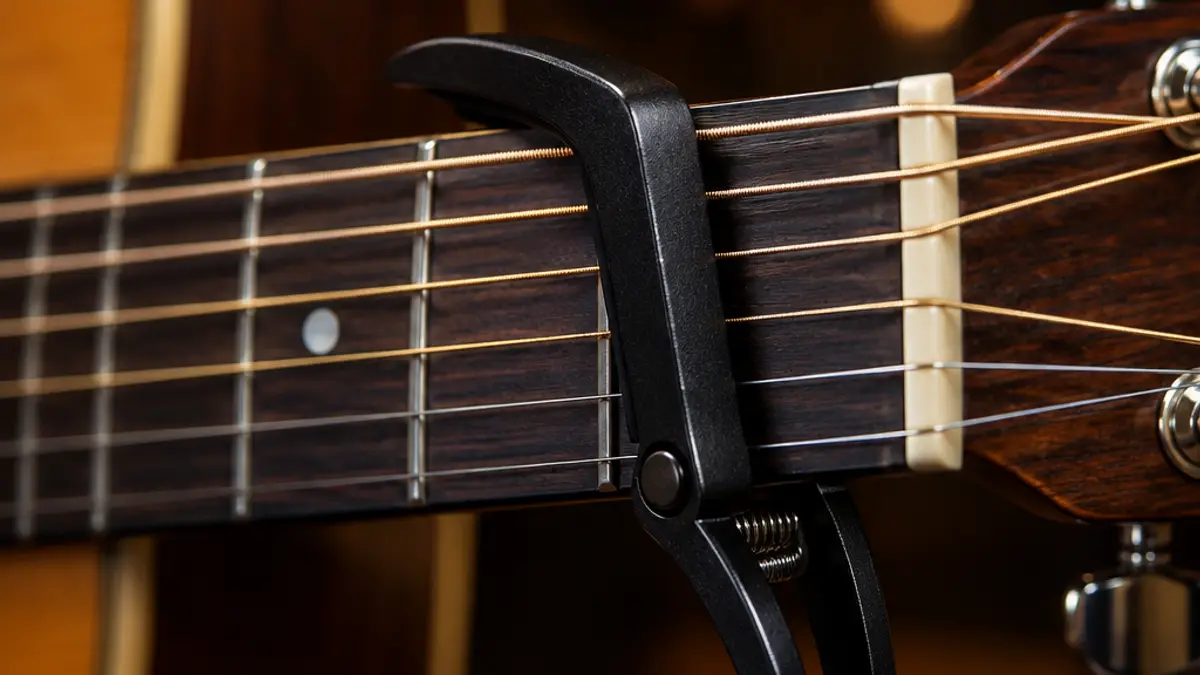
| Capo | Changes key while keeping open chord shapes — used in countless songs | Spring-loaded capos are quick; screw-adjusted ones cause less tuning drift |
| Guitar stand or wall hanger | A guitar out of its case gets played much more often | Keep it away from radiators and windows |
| Metronome | Essential for timing | Use our online metronome |
| String winder and cutter | Makes changing strings much faster | Many combine winder, cutter and bridge-pin puller |
| Microfibre cloth | Wipe strings and body after playing | Keeps strings fresh for longer |
For electric guitar
- An amp or headphone amp — see amps, pedals and headphones.
- A good instrument cable (3–6 m). Cheap cables often crackle or fail.
- Strap locks if your guitar is heavy.
Useful later
- Humidifier / humidity packs for solid-wood acoustics in dry climates or heated homes. See humidity and storage.
- Footstool or guitar support for classical position.
- Slide for blues and open tunings.
- Music stand for books and chord sheets.
- Basic tool kit: truss rod wrench (usually included with the guitar), small screwdrivers.
What you can skip
- Finger-strengthening gadgets — playing the guitar builds the right strength.
- Expensive boutique picks and cables as a beginner.
- Pedals before you have learned the basics on a clean sound.
How to use a capo
Place the capo just behind the fret (not on top of it), straight across the neck, with just enough pressure to stop buzzing. Then play normal chord shapes — they will sound higher. For example, with the capo on the 2nd fret, a G shape sounds as A. Our transposer shows which shapes to use for any key.
Frequently asked questions
What accessories does a beginner guitarist need?
A tuner, picks, a spare set of strings, a gig bag and a strap. A capo and a guitar stand are very useful additions.
What thickness of pick is best?
Medium picks (around 0.6–0.73 mm) are a great all-round choice. Thin picks suit strumming; heavy picks give control for single notes and lead playing.